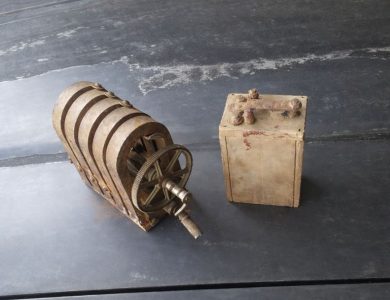
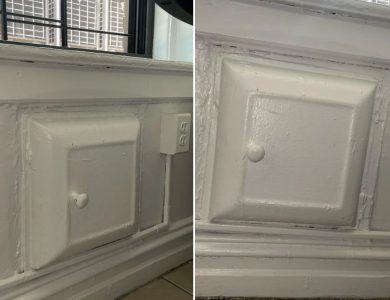
I found this hanging from the basement rafters of my 100 year old house.
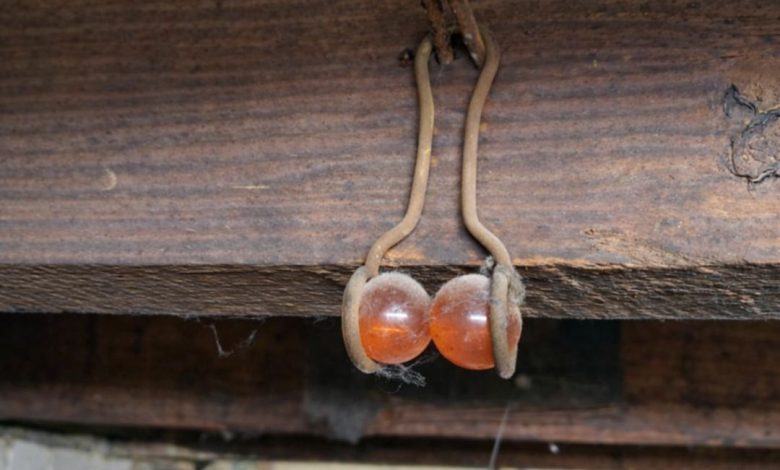
Moving into an old house often comes with surprises—especially when hidden items turn up in walls, basements, attics, or beneath floorboards. In one home estimated to be around 100 years old, residents discovered a strange antique object described as a rare marble cutter sharpener.
At first glance, the tool looked confusingly familiar—so much so that many people mistook it for something else entirely.
Mistaken for a Toy
Because of its appearance, some believed the object resembled the classic “Clackers” toy popular in the 1960s and 1970s. However, key details suggest it is not the toy:
- Clackers were typically made of plastic acrylic balls connected by string
- This antique piece appears to have:
- Two glass marbles
- A wooden or metal base
- A steel pole structure
Those differences fueled discussion about what the object truly is—and why it was made.

What the Tool Is Believed to Do
The most common explanation is that it functioned as a blade or razor sharpener, reportedly used around the 1930s to help hone extremely sharp steel edges. While information about its exact origin is limited, the object’s design is often described as a reminder of the craftsmanship of handmade tools from earlier eras.
A Brief Look at the Long History of Shaving
The discovery also reignited curiosity about how shaving tools evolved over time. Historians widely associate shaving with ancient practices dating back thousands of years.
Shaving has progressed through many forms, including:
- Early tools such as sharpened stones, shells, and even shark teeth
- Ancient razors made from gold and copper, including finds connected to ancient Egyptian burials
- Modern advances, from safety razors to multi-blade disposable razors and electric shavers
Over time, shaving shifted from a sign of status and wealth to an everyday routine for many people.

Why Collectors Still Find It Useful
Even if it seems outdated today, the marble device is sometimes described as both practical and elegant. Supporters claim it can still be used to sharpen:
- Kitchen knives
- Straight-edge razors
The proposed method is simple:
- Run the blade edge between the two marbles several times to maintain a fine edge
Some also argue it delivers a smoother sharpening experience than certain modern sharpeners that can become rough or create an uneven finish.
Online Debate: Sharpener, “Kenberry” Tool, or Something Else?
Because the tool is uncommon, many people who find one turn to online communities to identify it. Discussion has produced several competing explanations, including:
- A blade sharpener sold door-to-door during the Great Depression era (as claimed by one commenter’s family story)
- A specific identification: “Kenberry edge sharpener” (though users noted it may not work particularly well)
- A completely different interpretation: a kitchen towel holder that slides onto a cabinet handle so the towel can move in and out easily