I was asked to identify this uncommon object by a friend who sent me a picture of it.
What It’s Called
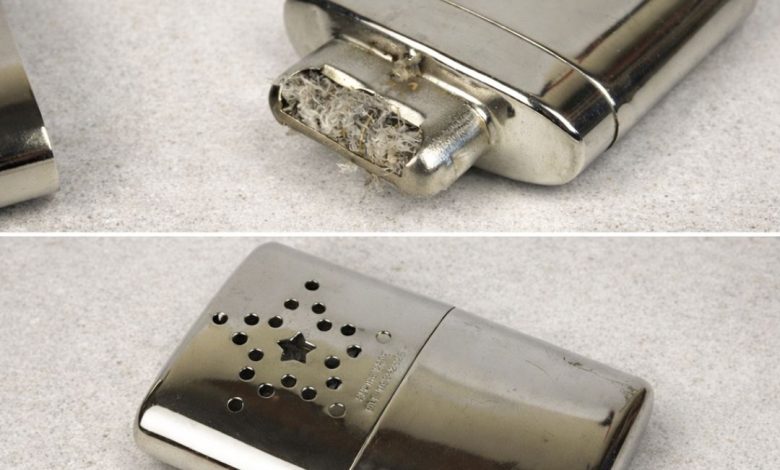
This item is best described as a vintage refillable pocket hand warmer, often known as a catalytic hand warmer. The “star shape” refers to the star-shaped vent opening on the perforated outer shell, which helped control airflow while also serving as a decorative design.
What You’re Seeing in the Photos (Main Parts)
- Outer perforated shell/case: The metal cover with round air holes and a star-shaped vent.
- Inner fuel reservoir (insert): The smoother metal body that sits inside the shell.
- Top assembly: The upper area where the warming mechanism is positioned (the part that needs airflow to operate).
When It Appeared
- Early versions of fuel-based pocket hand warmers became commercially common in the early 20th century.
- The style shown here—compact, metal, refillable, and widely sold for personal winter use—was especially popular from the 1940s through the 1950s, aligning with the “Vintage 1950s” description.
Who Created It (Origin and Key Names)
- The modern refillable catalytic hand warmer concept is strongly associated with Niichi Matoba, a Japanese inventor linked to early commercial catalytic warmers in the 1920s.
- By the mid-century period, many companies produced similar designs; in the United States, Zippo helped popularize catalytic hand warmers in the 1950s, and other makers also released comparable pocket warmer models.
What It Was Used For (Main Purpose)
Primary function: warming hands in cold weather without electricity.
Typical users included:
- commuters and outdoor workers
- hunters, anglers, campers
- people attending winter events (sports, markets, festivals)
How It Worked (Simple Explanation)
Most 1950s pocket warmers like this operated using lighter fluid and a catalytic burner:
- The inner reservoir was filled with a small amount of fuel (commonly lighter fluid).
- The warming head used a catalytic reaction (often involving a platinum catalyst) that allowed the fuel vapor to oxidize and generate heat.
- The reaction produced steady warmth with no open flame, while the outer shell’s holes controlled airflow and helped distribute heat safely.
Typical Performance (What Owners Expected)
- Portable warmth for hours (often several hours per fill, depending on size and conditions)
- A gentle, continuous heat rather than a quick burst
- Reusability: refill, restart, and use again season after season
Why It Was Considered “Unique” or Notable
- Refillable and reusable (long before disposable heat packs became common)
- Compact metal construction meant it could survive daily carry
- The star vent pattern gave it a recognizable mid-century look while serving a practical airflow role
Practical Notes for Handling Vintage Models (Safety-Focused)
- Use only in well-ventilated settings and avoid prolonged direct skin contact without a sleeve/pouch.
- Vintage seals and parts can age; a unit may need inspection before any attempt to operate it.
- Keep away from children and flammable materials if used.
In One Sentence
This 1950s star-vent pocket hand warmer is a refillable catalytic heater—a compact, mid-century solution designed to deliver hours of portable warmth using fuel and controlled airflow.