Seen Purple Fence Markings? Here’s What They Signal to Visitors
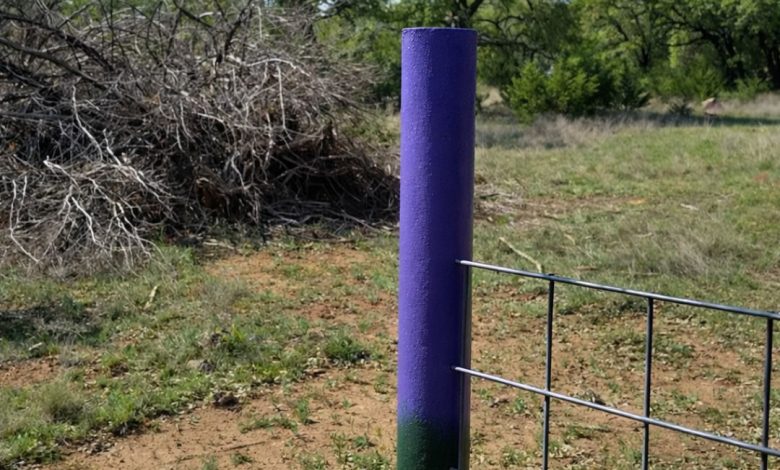
A surprising sight on rural roads
Travelers across Texas—especially in the Hill Country—often notice fence posts painted purple on ranches and farms. What looks like a decorative choice is actually treated as a serious property warning in many areas, and similar markings appear in other states as well.
What purple fence posts mean
In practical terms, purple paint on fence posts, gates, or trees is used as a “No Trespassing” notice—a clear signal that you are approaching private property and should not enter without permission.
Why landowners use paint instead of signs
Traditional “No Trespassing” signs can be expensive and frustrating for rural landowners to maintain. According to common explanations shared by landowners, signs are frequently:
- Vandalized
- Stolen
- Shot at or used for target practice
- Removed, which can create confusion about boundaries
Purple paint became a durable, hard-to-remove alternative that still communicates the same message: Stay out unless you have permission.

How the “purple paint” rule is commonly described in Texas
Texas is often cited for a “purple paint” approach under criminal trespass rules, where paint markings can serve as visible notice. The commonly shared requirements describe markings that should be:
- Mark format and placement
a. Vertical
b. At least 8 inches long
c. At least 1 inch wide
d. The bottom of the mark placed about 3–5 feet above the ground - Spacing guidance
- In timberland: markings no more than 100 feet apart
- On open land: markings no more than 1,000 feet apart
- Visibility
- Marks must be easy to see from the direction someone would approach the property
What happens if you ignore the warning
When purple paint is used as notice, entering anyway can be treated as trespassing. Penalties vary by state and circumstance, and laws can change over time, but the key point is simple: purple markings are meant to remove “I didn’t know” as an excuse.
Why the color purple was chosen
Purple is widely described as a practical choice because:
- It stands out against natural backgrounds (trees, brush, fencing)
- It is distinct and uncommon in nature compared with reds, greens, or browns
- It is often said to be highly visible even for many people with color-vision differences
Takeaway for travelers, hikers, and backroad drivers
If you see purple paint on fence posts, gates, or trees, treat it as a clear message:
- Do not enter unless you have explicit permission
- Assume it marks private property boundaries
- When in doubt, turn back or find the property owner for guidance
In short, those purple fence posts are not decoration—they are a direct, durable “No Trespassing” warning meant to protect landowners and prevent misunderstandings.