This object has been making our work easier even to this day, but few people know what it is
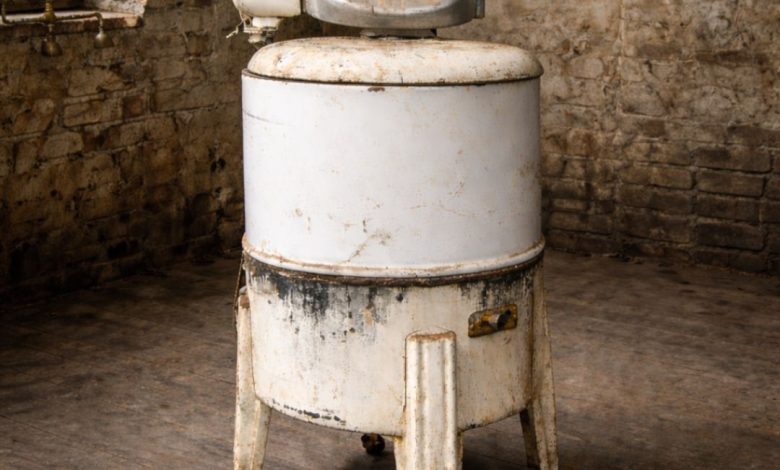
At first glance, the object in the photo looks like a strange metal barrel on legs with a set of rollers on top. It’s scuffed, stained, and clearly old. But this “mystery item” was once a household powerhouse—and its basic idea still influences how we do laundry today.
So what is it?
It’s a vintage wringer washing machine (wringer washer)—an early style of washer that cleaned clothes in a tub and then squeezed water out using the rollers on top.
What You’re Seeing in the Image
This is a classic wringer washer design, easy to recognize once you know the parts:
- Large enamel tub (where clothes and water were agitated to wash)
- Top wringer assembly with two rollers (used to squeeze water out of fabric)
- Small motor housing (on some models) that powered the tub’s agitation and/or the wringer
- Sturdy legs to keep it elevated and stable
Even though it looks simple, it was a major step forward from fully hand-washing everything.
Why So Few People Recognize It Today
Wringer washers were common decades ago, but modern homes moved on to fully automatic machines. Many people today have never seen one in real life, because:
- They were replaced by spin-cycle automatic washers
- They’re often found only in old basements, barns, storage sheds, or antique shops
- Younger generations mainly know washers as “push-button” appliances
How a Wringer Washing Machine Works
Unlike modern washers that drain and spin at high speed, a wringer washer used a more hands-on process.
Step-by-step:
- Fill the tub with water (often heated separately on a stove) and add soap.
- Put clothes inside while an internal agitator or mechanism moves water through fabric to loosen dirt.
- Lift wet clothes out of the tub.
- Feed each item carefully into the wringer rollers.
- The rollers press out water, making clothes much lighter and faster to dry on a line.
The wringer didn’t “dry” clothes like a modern dryer—but it removed a huge amount of water, which was the real time-saver.
Why This Machine Made Work Easier
For its time, the wringer washer was a serious upgrade because it reduced the hardest parts of laundry:
- Less scrubbing by hand
- Far less dripping, heavy lifting compared with wringing fabric manually
- Faster drying time because water was squeezed out efficiently
- Useful for large items like sheets, towels, and work clothes
In short, it turned an all-day chore into something far more manageable.
The Most Important Feature: The Wringer Rollers
Those rollers weren’t just an add-on—they were the secret weapon.
Key benefits of the wringer:
- Extracts water quickly
- Reduces drying time dramatically
- Helps avoid carrying soaking-heavy laundry across the house or yard
That simple mechanical squeeze is still the same concept used today in mop wringers, some compact washers, and certain manual laundry tools.
Do People Still Use Them “Even Today”? Yes—In Specific Situations
While not common in most cities, wringer washers still appear in real-world use because they can be practical:
- Off-grid living (limited electricity)
- Cabins, rural properties, or farm use
- Emergency backup when modern machines break
- Historical reenactments or heritage homes
- People who prefer simple, repairable mechanics
Some modern “manual” or semi-manual washers borrow the same idea: wash in a tub, remove water mechanically, air-dry.
Safety Note (Important if You Ever Encounter One)
The wringer is powerful. The rollers can pull fabric in fast.
- Keep fingers, hair, and loose sleeves away from the rollers
- Never let children operate or play near it
- If restoring one, ensure the wringer has a release mechanism and the machine is stable before testing
Why This “Strange Item” Still Matters
This machine is more than an antique—it represents a turning point in daily life. It helped families save time, reduce physical strain, and paved the way for the automatic washers we rely on now.
Bottom line: The “mystery object” is a wringer washing machine, and its clever design shows how a simple mechanical solution can transform a household chore—so much that parts of the concept still live on today.