Timeless antiques remain with us, and this one has served many well in their work. Do you know what it might be?
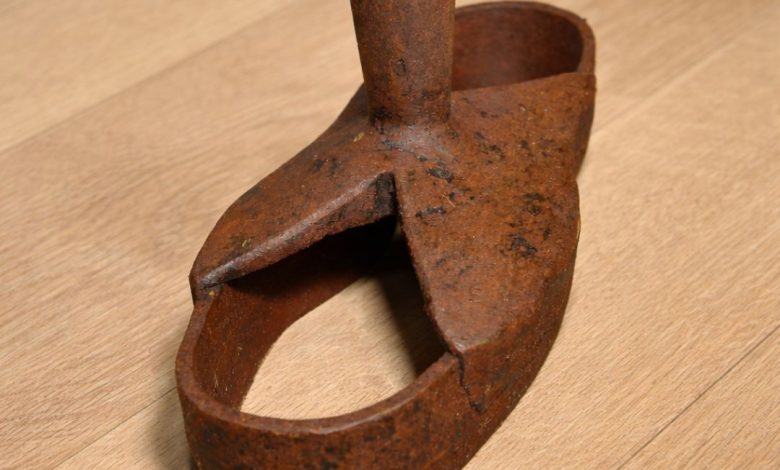
This antique steel shoe sole die cutter is a traditional cobbler’s tool designed to cut consistent sole-shaped pieces from leather, rubber, or similar sheet materials. Before automated presses and modern die systems became common, tools like this helped shoemakers work faster while keeping cuts uniform.
What This Tool Is
A sole die cutter is essentially a shaped cutting form used to create repeatable outlines. This example appears to be made from heavy steel, with a die-like cutting perimeter and a raised central post/handle area for applying force.
Key Features Visible in the Photo
- Solid steel body with a thick, durable build
- Die-shaped cutting edge/frame intended to press into material
- Raised central post used to grip, align, or strike/press
- Open interior voids that reduce weight and allow material clearance
- Aged patina and surface rust, typical of older workshop tools
How a Sole Die Cutter Typically Works
In a traditional shoemaking or repair setting, a cobbler would:
- Lay leather or soling material on a cutting surface (often end-grain wood or a dedicated cutting block).
- Position the die cutter where the shape needs to be cut.
- Apply pressure by:
- Using a hand press, or
- Striking carefully (depending on the tool style and shop practice).
- Remove the die and separate the cut piece, then trim or finish edges as needed.
Common Uses in a Cobbler’s Shop
- Cutting replacement sole components from leather sheets
- Producing repeatable shapes for repairs or small-batch work
- Speeding up layout work compared with tracing and knife-cutting
- Supporting traditional shoemaking and leathercraft methods
Why Collectors and Leatherworkers Value It
- Represents heritage shoemaking craftsmanship and early repair trade history
- Built to last: many are forged or heavy-machined steel, not lightweight modern alloys
- Attractive as a display piece due to industrial form and authentic wear
- Useful for historical demonstrations, prop styling, or workshop décor
Condition Notes (Based on the Image)
- Visible oxidation/rust is present, consistent with age and storage conditions
- The cutting edge may be dull or uneven from use, corrosion, or impact over time
- Surface marks and staining suggest it was a working shop tool, not decorative-only
Care and Handling Tips
- Do not aggressively grind unless restoration for use is the goal (it can reduce originality and collector value).
- To stabilize condition:
- Wipe down and remove loose debris
- Use a light oil coat to slow further rusting
- Store in a dry environment away from humidity
- If intended for use, consider having a professional assess and dress the cutting edge safely.
What to Highlight When Listing or Displaying
- Material: steel, heavy-duty construction
- Function: shoe sole die cutter / cobbler leatherworking tool
- Era feel: antique/vintage industrial workshop piece
- Condition: patina/rust present (authentic aging)
- Display appeal: strong form factor for décor, studio props, or tool collections
Quick Buyer Checklist
- Edge integrity: no major cracks or missing sections
- Stability: sits flat and doesn’t wobble excessively
- Originality: consistent wear and patina (not freshly fabricated)
- Use vs. display: decide whether you want a collectible artifact or a restored working die
Conclusion
This antique steel shoe sole die cutter is a practical relic of traditional cobbler work—built for durability, designed for consistency, and now valued as both a collectible tool and a tangible piece of shoemaking history.