Trump Warns Iran Of Overwhelming Consequences Amid Reported Assassination Threat
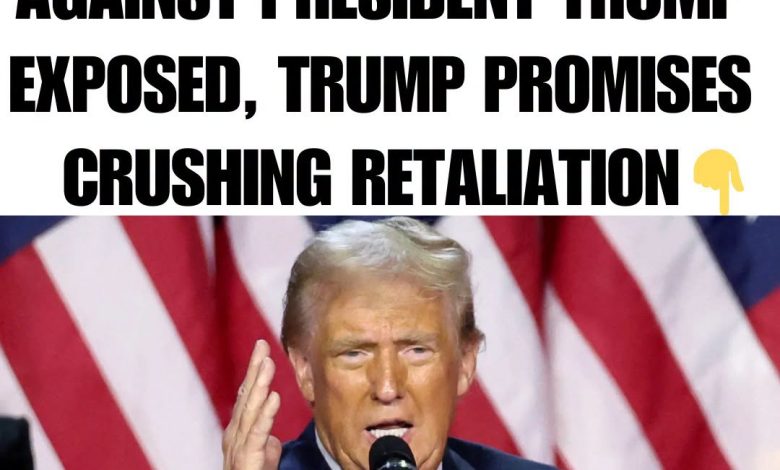
A reported Iranian plot targeting President Donald J. Trump has once again raised serious concerns about Tehran’s willingness to pursue political violence beyond its borders. According to accounts cited in the original reports, Israeli intelligence warned American officials about a possible threat against the President, adding another dangerous dimension to already heightened tensions in the Middle East.
President Trump responded with an unmistakable warning. In a statement posted on Truth Social, he said the United States was prepared to launch an overwhelming military response if Iran attempted to assassinate the sitting American president.
Trump’s central message was clear: Any attack on the President of the United States would be treated as an attack on the nation itself.
The language was severe, reflecting both the seriousness of the alleged threat and Trump’s long-standing belief that deterrence depends on convincing adversaries that the consequences of aggression will be unbearable.
For Trump’s supporters, this represents the essence of his “peace through strength” doctrine. They argue that hostile regimes are less likely to act when America communicates its red lines clearly and demonstrates that it possesses both the capability and the political will to enforce them.
Deterrence fails when an enemy believes American warnings are empty.
A History of Iranian Threats
The alleged plot did not emerge in a vacuum. Iranian officials and organizations linked to Tehran have repeatedly threatened retaliation for the 2020 U.S. strike that killed Qassem Soleimani, the powerful commander of Iran’s Islamic Revolutionary Guard Corps’ Quds Force.
Soleimani was regarded by the Iranian government as a national hero. American officials, however, accused him of directing militant networks responsible for attacks that killed and injured U.S. service members and allies throughout the Middle East.
Since his death, Iranian figures have publicly demanded revenge against Trump and other former members of his administration. U.S. authorities have also investigated previous alleged plots involving Iranian operatives or individuals accused of acting on Tehran’s behalf.
That history gives the latest warning added significance. Even so, intelligence claims should be independently evaluated, particularly when they emerge during a period of military confrontation and intense diplomatic pressure.
Trump’s Strategy: Make the Cost Unacceptable
Trump’s response reflects a familiar strategy: Do not merely promise to stop an attack—promise consequences so severe that the enemy abandons the plan altogether.
Supporters believe this approach helped restrain adversaries during Trump’s earlier presidency. They point to his decision to eliminate Soleimani, impose extensive sanctions and withdraw from the Iran nuclear agreement as evidence that he was willing to confront Tehran directly.
Critics counter that extreme threats can increase the risk of miscalculation, especially when nuclear-capable states, regional proxies and large military forces are involved. They argue that deterrence must be combined with intelligence sharing, diplomacy and carefully defined objectives.
Both points deserve consideration. Strength without strategic discipline can produce escalation, but diplomacy without credible consequences can invite aggression.
The challenge for any American president is to combine military readiness with sound judgment.
The U.S.–Israel Intelligence Partnership
The reported Israeli warning also highlights the importance of intelligence cooperation between Washington and Jerusalem.
The United States and Israel have sometimes disagreed over ceasefires, military operations and long-term strategy toward Iran. Nevertheless, both countries view Iran’s missile program, proxy networks and nuclear ambitions as major security concerns.
Israel has extensive intelligence capabilities focused on Iran, while the United States possesses global surveillance, military and diplomatic resources. Cooperation between the two nations can help identify threats before they become attacks.
However, intelligence supplied by an ally should still be reviewed independently. Israel has its own strategic priorities, and American decisions must ultimately be based on verified evidence and the national interests of the United States.
Iran’s Network of Regional Power
The Iranian government has expanded its influence through armed groups and political partners across the Middle East. Tehran has supported organizations including Hezbollah in Lebanon, Hamas in Gaza, militias in Iraq and Syria, and the Houthi movement in Yemen.
Iran describes these groups as part of a regional “axis of resistance.” American and Israeli officials argue that the network allows Tehran to pressure its enemies while limiting direct responsibility for attacks.
This proxy strategy complicates deterrence. An assault might be carried out by a militia, cyber unit or covert operative rather than uniformed Iranian forces. That makes attribution essential.
Before ordering military retaliation, the United States must establish who authorized the attack, who carried it out and whether the evidence meets the highest possible standard. A failure to do so could draw America into a much wider conflict.
Protecting the Presidency Is a National Obligation
Americans do not have to agree with Trump politically to recognize the gravity of an alleged foreign assassination plot.
The presidency is not merely a person or a political party. It is an American institution. A foreign government that attempts to murder a sitting president would be attacking the constitutional order of the United States.
Protecting the President is therefore not a partisan cause. It is a matter of national sovereignty and security.
Federal law-enforcement agencies, intelligence services and the Secret Service must treat all credible threats seriously. At the same time, government officials and media organizations have a responsibility to distinguish confirmed findings from preliminary intelligence or politically motivated speculation.
Strength Must Be Paired With Restraint
Trump is right to communicate that the United States will not tolerate foreign-sponsored violence against its leaders or citizens. Iran should understand that an assassination attempt would trigger grave consequences.
But the strongest American response is not necessarily the loudest one. It is the response that protects the country, preserves alliances, punishes those responsible and avoids unnecessary harm to American troops and civilians.
True strength requires readiness, credibility and restraint.
The Iranian leadership should have no doubt that the United States is capable of defending its President. It should also understand that Washington has the intelligence resources and military power to hold accountable anyone who plans or carries out an attack.
America must remain vigilant. It must verify the intelligence, strengthen presidential security and communicate clear consequences through both public and private channels.
The objective should not be war for its own sake. The objective should be deterrence: preventing an attack before it occurs and ensuring that no hostile government believes it can target the President of the United States without paying an extraordinary price.