What is this type of clamp used?
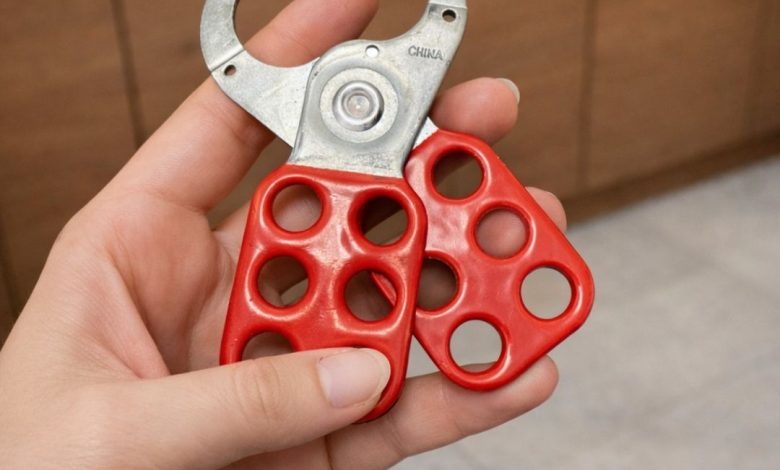
A lockout hasp is a simple, highly visible safety accessory used in workplaces to prevent equipment from being turned on while people are servicing it. The red-and-silver device shown in the images is a Master Lock–style lockout hasp designed for Lockout/Tagout (LOTO) procedures, allowing multiple workers to secure the same shut-off point with their own padlocks.
What It’s Called
- Common name: Lockout Hasp (also called a Safety Hasp or Standard Lockout Hasp)
- Purpose-built for: Lockout/Tagout (LOTO) programs
- What the design indicates:
- A metal, jaw-shaped hasp that clamps onto a lockout point
- Multiple padlock holes in the red body so several people can lock at once
- Bright red for high visibility in industrial safety environments
What It Does
A lockout hasp turns one lock point into a multi-lock station:
- It lets a team place several padlocks on the same energy-isolating device.
- The equipment cannot be re-energized until every padlock is removed.
- It supports the core safety rule: “One person, one lock, one key.”
How It Works (In Plain Steps)
- A supervisor or technician shuts down the machine and isolates the energy source (switch, breaker, valve, disconnect, etc.).
- The lockout hasp is attached to the isolation point.
- Each worker puts their own padlock through one of the hasp’s holes.
- The machine stays locked out until the last worker removes their lock.

Why It Exists
Lockout hasps solve a real workplace problem: more than one person may be working on the same equipment at the same time. Without a hasp, only one lock might fit—making it easier for someone else to remove it and restart the machine. A hasp creates a clear, physical rule: if any lock remains, the machine stays off.
Key Features Visible in the Images
- Metal jaw head: Designed to attach to latches, switch handles, or lockout points.
- Red, hole-patterned body: Provides multiple lock positions (the number of holes varies by model).
- High-visibility color: Red is widely used for lockout devices to signal hazard control.
- Stamped markings: Some units show manufacturing origin (for example, “CHINA” on certain versions).
When It First Appeared (Origins)
- The basic “hasp + padlock” concept is historically old, but the modern lockout hasp emerged as industry began formalizing maintenance safety procedures.
- Modern LOTO practices expanded significantly in the mid-to-late 20th century, becoming widespread as factories adopted standardized safety systems.
- In the United States, broad adoption accelerated around the period when formal Lockout/Tagout rules and compliance programs became standard in many industries.
Who Created It
- There is no single, universally credited inventor of the lockout hasp as a concept. It evolved from traditional padlock hasps and was adapted into a dedicated safety tool by industrial safety engineers and lock manufacturers.
- Master Lock is one of the best-known manufacturers associated with commercializing lockout hardware and making standardized versions widely available for workplace safety programs.
Where It’s Commonly Used
- Manufacturing plants and maintenance shops
- Electrical panels, disconnect switches, and breaker lock points
- Mechanical lock points on machines and guards
- Facility maintenance areas (HVAC, pumps, compressors)
- Any process requiring group lockout
Why It Matters
The lockout hasp is small, inexpensive, and easy to overlook—yet it enforces one of the most important safety principles in maintenance: nobody restores power until everyone is clear.