What’s this electric tool? When plugged in and turned on it vibrates very intensely.
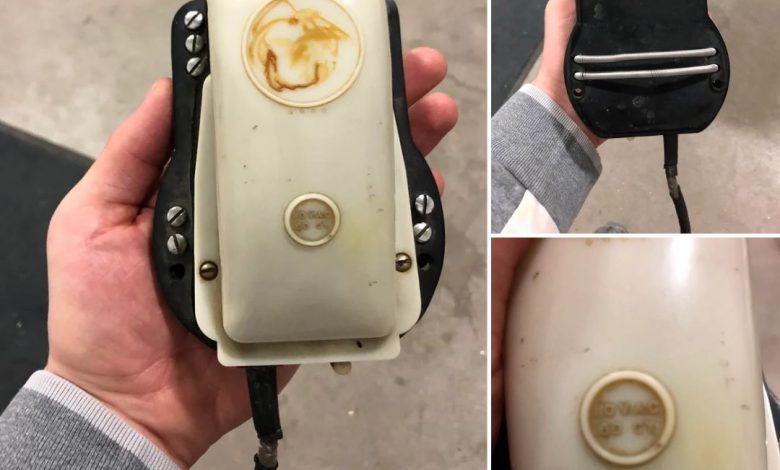
The device shown in the photos is a vintage electric massager, sometimes labeled historically as a “vibrator” because it produces rapid mechanical vibration. Long before modern percussion massage guns, these plug-in units were marketed for everyday muscle comfort and general body massage at home or in small clinics.
What It’s Called
- Common name: Vintage Electric Massager / Vibratory Massager
- Marking visible on the unit: “No-Vac” and “60 cyc” (60 cycles)
- Practical meaning of “60 cyc”: Designed for 60 Hz AC power, typical of North America.
What the Photos Show (Key Identifiers)
- Handheld, corded body with an off-white top cover and black base
- A small circular badge reading “No-Vac” and “60 cyc”
- Spring/coil contact bars on the massage side (metal coils set into the base)
- Multiple screws and a sturdy housing, consistent with mid-century appliance construction
When This Type of Product First Appeared
Electric vibratory massagers trace their roots to the late 1800s, when early electromechanical devices were developed to deliver therapeutic vibration for muscle aches and fatigue. They became far more common in the early to mid-1900s, when household electricity and compact motors made personal “home therapy” appliances practical.
Estimated era for the specific unit shown:
Based on the materials, design, and 60-cycle marking, this particular No-Vac massager is most consistent with mid-20th century production (approximately the 1940s–1960s). (This is an informed estimate from design cues; the exact year usually requires the original box, model plate, or paperwork.)
What It Was Used For
These devices were commonly promoted for non-medical, comfort-oriented purposes such as:
- Relaxing tight muscles (back, shoulders, legs)
- General massage for stiffness after work or activity
- Soothing massage sensation to support comfort and circulation in the treated area
- Occasional use in barbershops, small therapy settings, or home “wellness” routines
How It Works (Simple Explanation)
- Inside the housing is a small electric motor.
- The motor drives an off-center weight or vibrating mechanism, creating rapid movement.
- That vibration transfers through the casing to the spring/coil massage surface, which helps spread the sensation across the skin and muscles.
- Users typically held it against a muscle group for short intervals.
Why the Spring/Coil Surface Matters
The coil bars serve as a durable contact interface that can:
- Distribute vibration across multiple points
- Reduce direct hard pressure from the housing
- Provide a slightly “rolling” feel depending on angle and movement
Safety Notes (Important for Vintage Electrical Devices)
Because this is a mains-powered vintage appliance, safe handling is essential:
- Check the cord for cracking, stiffness, or exposed wire before plugging in.
- Ensure it matches your region’s power standard: 60 Hz (and typically 110–120V) is common for North America.
- Avoid use near water and do not operate with damp hands.
- If the motor smells hot, sparks, or runs inconsistently, stop using it and have it inspected by a qualified technician.
Why It’s Considered “Vintage” and Collectible
Collectors and tool enthusiasts value items like this because they represent:
- An era when “personal wellness devices” were built like small appliances
- Early consumer adoption of electric comfort tools
- Distinctive industrial design and long-lasting construction