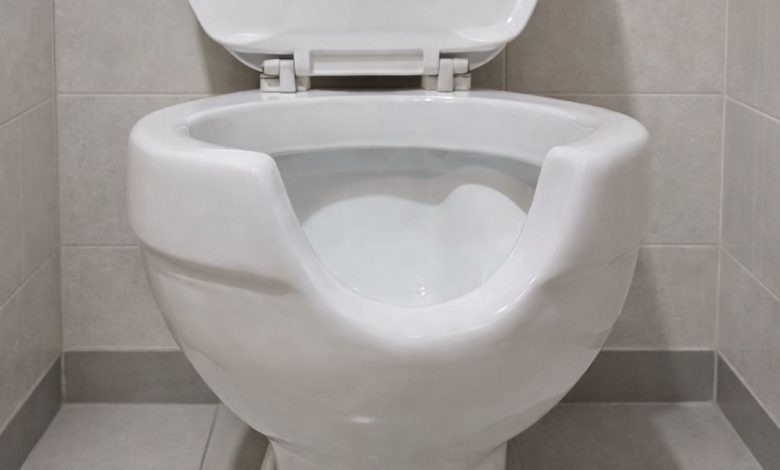
Why do you think this toilet has this hole in the front?
Name (Common Terms)
- Accessible toilet / handicap toilet (general category)
- Open-front toilet seat (the defining feature shown in the images)
- Sometimes described as a transfer-friendly toilet in accessibility discussions
What You’re Seeing in the Images
This is a toilet designed to be used with an open-front seat—a seat with a gap at the front rather than a full ring. The shape may look unusual to people who are used to standard household toilets, but it is intentional and tied to accessibility and hygiene.
When It First Appeared (Timeline)
There is no single “birth year” for this design, because it evolved in stages alongside modern plumbing and disability-access design. A practical timeline is:
- Early–mid 1900s: Public-health thinking and standardized restroom hardware accelerated, especially in Europe and North America.
- Mid–late 1900s (post–World War II era): Accessible building design became more formalized, and specialized fixtures (including transfer-friendly seating and layouts) became more common in institutions and public buildings.
- Late 1900s to present: Open-front seats became widely used in many regions for public restrooms and, in some cases, accessible installations.
Who Created It (Inventor / Origin)
- No single person is credited as the inventor of the open-front accessible toilet concept.
- The design is best understood as an industry and standards-driven innovation, developed over time by:
- Sanitary ware manufacturers (to produce seats and bowls suited to public and assisted use)
- Facility planners and healthcare designers (hospitals, care homes, public buildings)
- Disability advocates and accessibility specialists who pushed for safer transfers and more inclusive restroom layouts
Primary Purpose and How It Helps
The open-front seat and related accessible setup aim to improve comfort, hygiene, and transfer mechanics, particularly for users who need assistance or are transferring from mobility devices.
Key Benefits (Practical Reasons)
- Easier transfers:
- The front gap can help some users move on and off the seat more directly, depending on the transfer technique and support rails.
- Reduced contact and improved hygiene:
- Less seat surface at the front can mean less skin contact for certain users and can support hygiene goals in shared facilities.
- Accommodation for assisted care:
- In some care settings, the open-front form can make cleaning and caregiver assistance more manageable.
- Common in some regions (notably parts of Europe):
- This style is often seen where restroom hardware choices emphasize standardization, maintenance efficiency, and public hygiene.
Important Clarification
- Not every open-front seat is exclusively for wheelchair users. In many places, open-front seats are simply standard in public restrooms for hygiene and maintenance reasons.
- True accessibility depends on more than the seat shape, including:
- Grab bars/handrails
- Transfer space (side clearance for wheelchairs)
- Seat height and toilet positioning
- Stable flooring and reachable controls
Where You’ll Typically Find This Design
- Hospitals and clinics
- Care homes and assisted-living facilities
- Public restrooms (depending on local norms)
- Accessible stalls designed to support transfers and assisted use
Why It Matters Today
This toilet style reflects a broader shift in design priorities: building bathrooms that are not only functional, but also safer, more inclusive, and easier to maintain—especially in shared or high-traffic environments.