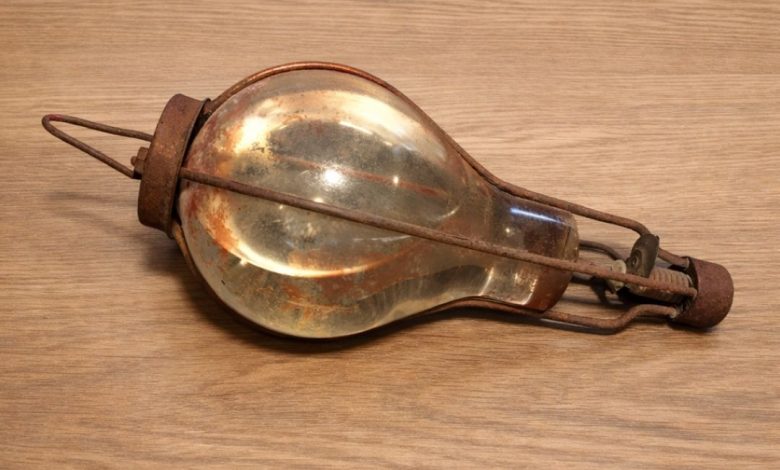
Unknown glass object filled with unknown liquid, found in an early 1900’s barn. Any leads?
What It’s Called
This object is commonly known as a Glass Globe Liquid Fire Extinguisher, also nicknamed a “fire grenade” or “fire bomb.” Many examples were branded by manufacturers; the markings shown indicate Red Comet Inc. as a maker/brand on at least one model.
When It Appeared
- Most surviving examples are typically dated to the early 1900s through the 1930s, with many described as circa the 1930s.
- They were popular before today’s pressurized, metal-cylinder extinguishers became standard.
Who Made/Created It
- These were produced by multiple manufacturers (often branded for sale to homes, schools, and businesses).
- Based on the visible stamp in the photos, Red Comet Inc. is one identifiable company associated with this style of extinguisher.
- A single “inventor” is difficult to credit from the provided information alone because several firms made similar designs over the same era.
What It Was Used For
The goal was straightforward: put out small fires quickly, especially in homes and workplaces, at a time when modern extinguishers were less common.
Common target fires included:
- Small kitchen flare-ups
- Wastebasket or paper fires
- Early-stage room fires (before they spread)
How It Worked (Simple Explanation)
These devices typically contained carbon tetrachloride (a liquid once used in older fire extinguishers). The globe was held in a metal cage with a triggering tip.
Key operating idea:
- Heat rises during a fire.
- If the heat became intense, a low-melting seal would release a mechanism.
- A spring-loaded tip would strike and break the sealed glass tip of the globe.
- The liquid would spray out and rapidly turn into vapor, which helped smother flames by reducing oxygen at the fire and interrupting combustion.
Why It Became Obsolete
Despite its clever design, it fell out of favor for major safety reasons:
- Toxicity hazard: carbon tetrachloride vapors are dangerous to inhale, especially in enclosed spaces.
- Fragility: the extinguisher relied on glass, making it easy to break during storage, transport, or handling.
- Better technology arrived: modern extinguishers became safer, stronger, and more reliable.
How to Recognize One (Visual Clues)
- Colored glass globe (often red/amber) inside a wire or metal cage
- A hanger/loop for mounting
- A sealed glass tip near the bottom
- A spring/trigger assembly designed to break the tip when released
- Maker marks such as “Red Comet Inc.” on the cap or fittings (as shown)
Why Collectors Want Them Today
- They are a striking piece of early 20th-century safety history.
- Many were discarded due to chemical concerns, and surviving examples can be harder to find, especially intact ones with original components.
Important Note
Because the extinguishing chemical used in many of these globes is associated with serious health risks, they are considered outdated and are generally treated as collectibles, not practical safety equipment.